
Uterine fibroid
Fibroids are benign (non-cancerous) tumours that grow in the muscles and tissues of the womb (uterus). These are very common, affecting almost 30% of women of childbearing age and become smaller after menopause. Fibroids can vary in size from about 1cmx1cm (size of a pea) to 12cmx12cm (size of a melon), and some may be even larger.
What are the symptoms
Most women do not have any symptoms and the fibroid is incidentally found during an ultrasound scan. When symptoms do occur, they are usually in relation to the size and location. A large fibroid may cause pressure on surrounding organs, especially on the bladder with urinary frequency or on the bowels with bloating or constipation. Smaller fibroids may cause heavy and painful periods.
How do I know if I have fibroids
An ultrasound scan can identify fibroids and their size.
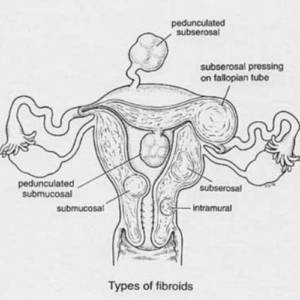
Fibroids may be located on the surface of the uterus (subserosal) or within the uterine muscles (intramural) or under the inner lining of the uterus (submucosal).
Subserosal fibroids grow on the outer walls of the uterus and if large can cause pain and swelling in the abdomen. A large fibroid can press on the bladder causing urinary frequency.
Submucosal fibroids usually cause heavy and painful periods as they may protrude within the cavity of the womb.
Intramural fibroids are confined within the muscles of the uterus and can cause pain, discomfort, and heavy painful periods.
How do you treat fibroids
Mr Alak Pal will go through the various options to obtain the best outcome suited to you..
If the fibroids are small and do not cause any symptoms, they can be monitored with ultrasound scans to see if they grow or cause any problems.
Treatment with medications:
There are several medications available that can help with symptoms of pain and heavy bleeding associated with uterine fibroids. These include nonsteroidal anti-inflammatory drugs (NSAIDs), hormonal birth control, and gonadotropin-releasing hormone (GnRH) analogues. The GnRH analogues cannot be used as a long term treatment because of side effects.
Treatment by surgery:
Sometimes surgical methods are required to obtain satisfactory control of symptoms. A submucosal fibroid projecting into the endometrial cavity can be resected with a camera in the uterine cavity. It is done as a day case and the patient can go home after a few hours. This procedure is called a transcervical resection of submucosal fibroid (TCRF)
Hysteroscopic resection of submucosal fibroid.
Myomectomy is a surgical procedure that involves removing the fibroids from the uterus and may be more appropriate for women who wish to preserve their fertility.
Hysterectomy is a surgical procedure that involves removing the entire uterus along with fibroids. This procedure is usually recommended for women who do not need to preserve fertility or who have multiple fibroids and severe symptoms that cannot be treated with other methods.
Treatment by Uterine Artery Embolisation ( UAE) :
Uterine Artery Embolisation of fibroid (UAE): UAE is a minimally invasive procedure that involves blocking the blood flow to the fibroids, causing them to shrink in size. This procedure is usually done on an outpatient basis by a radiologist. Side effects include pain, moderate to severe, as the fibroids slowly shrink in size.
How to prepare for surgery
Surgical procedures are usually done under general anaesthesia and you would be required to limit your food and drink in the hours before the surgery as advised by the hospital.
If you are coming in for a TCRF, you would come into the hospital for half a day, and very likely to return home on the same day. If you are coming in for a myomectomy or hysterectomy, you might stay in the hospital for 2 to 3 nights.
After surgery
After surgery, you will usually be prescribed blood thinning injections for about 10 days to complete the course of injections at home. You will also be given contact numbers if you have any concerns in the weeks after surgery.